
28 July 2024 · Theme 1 Policy Insight · Weehub News
- July 28, 2024
- Posted by: SUSAN KIAMBATI KALANGI
- Categories: Theme 1 Policy Insight, Weehub News
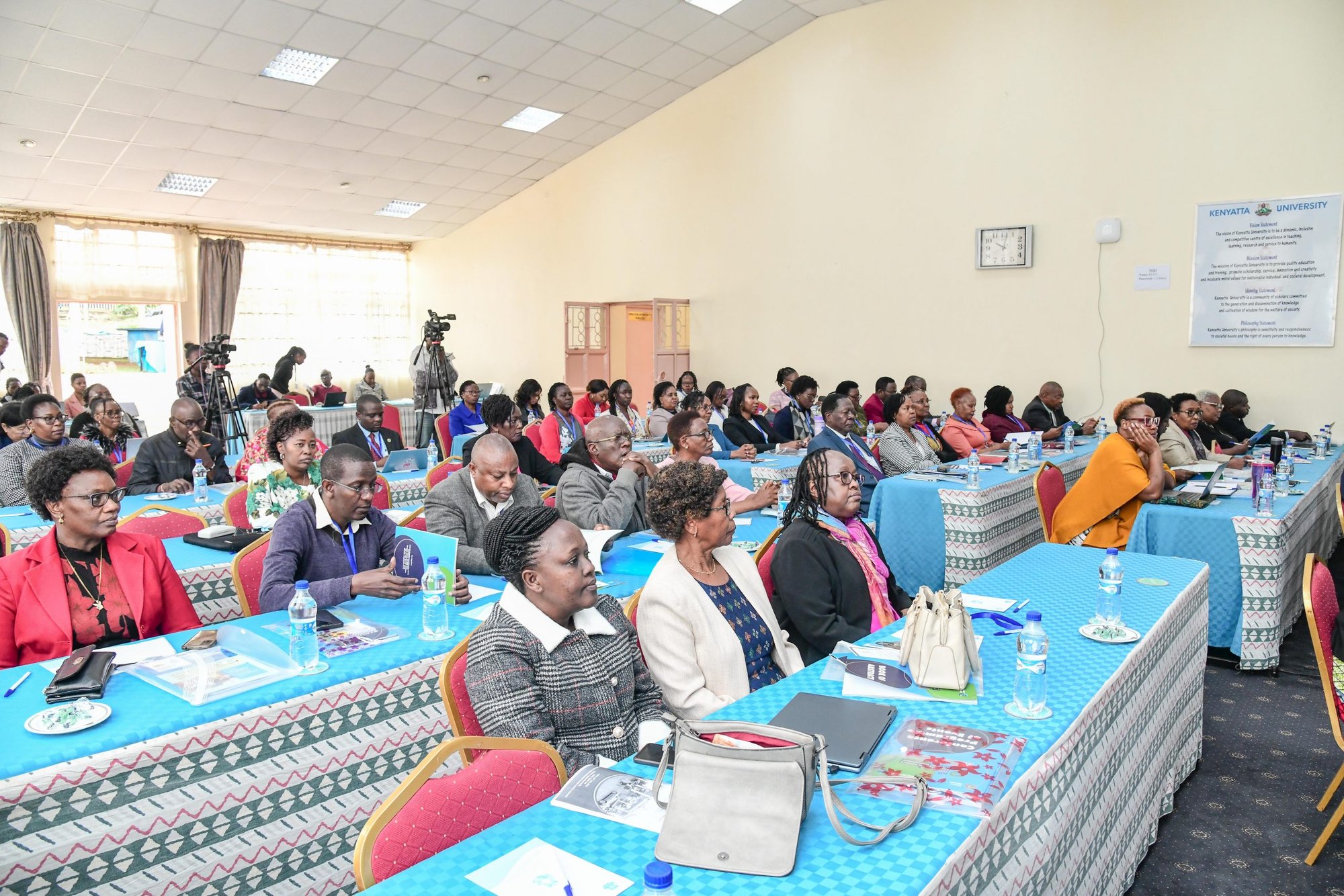
The KU-WEE Hub hosted an International Conference from 24th -26th July, 2024 at the Kenyatta University Conference Center (KUCC) at Kenyatta University. The broad theme of the conference was “Initiatives for What Works to Advance Women’s Economic Empowerment”. The purpose of the Conference was to disseminate evidence so far generated by the Project as well as to expand networks, increase visibility and outreach. The conference brought together researchers, scholars, networking groups and partners, stakeholders – including policy makers and implementers- to share knowledge and experiences pertaining to the broad theme of the conference.
The objectives of the conference were:
- To share experiences and learn lessons on the Initiatives for What Works to Advance Women’s Economic Empowerment.
- To network and collaborate through partnerships that will enhance the development of policies for increased women’s economic empowerment across Africa;
- To identify knowledge gaps that could be explored during future research, training and programming.
Conference subthemes
- Education and Skill Development for Women’s Economic Empowerment
- Health, Well-being and WEE
- Legal and Policy Advocacy for WEE
- Environment, climate Change, Sustainable Development and WEE provocation
- Care Work and its Effects on WEE
Key conference provocations:
- There is need to mainstream gender-responsive budgeting across public and private institutions:
- Establishment of a gender management database to be updated regularly and should include disaggregated data on women’s initiatives as a minimum standard. There should be a deliberate move to strengthen the capacity, to develop and use the national guidelines on collection, collation and analysis of sex disaggregated to inform women’s empowerment policies.
- The existing legal and institutional framework is sufficient to promote gender responsive budgeting. However, there are implementation gaps across the budget cycle which need to be addressed.
- The national governments should increase resources to WEE issues and in turn improve the welfare of women through increased income levels, giving them more entrepreneurial skills, and further enhance women’s decision-making and control over resources.
- There is need to build accountability for gender equality in the country
- Develop gender equality markers for the country
- Develop county level Women’s Economic Empowerment Index
- We need to change socio-cultural norms that inhibit WEE at scale
- Abolish social cultural norms that limit women and girls to the periphery and perpetuate violence against women.
- We need to mainstream care work across sectors of the economy
Unpaid childcare burdens women in across communities. They spend excessive time on childcare and chores, limiting their ability to work, generate income, and participate in the economy.
- Invest in Crèches:Secure funding and partnerships to establish crèches as permanent community resources.
- Empower Women:Provide skills development programs to diversify and strengthen their livelihoods.
- Crèche Quality:Develop age-appropriate curriculums, and equip crèches with qualified staff and materials.
- Incentivize Usage:Promote the benefits of crèches for women’s economic advancement.
- Program Expansion:Scale up the crèche program and women’s empowerment initiatives throughout counties.
- We need to develop programmes that bring on board men and boys to promote gender equity
- Women’s Economic empowerment initiatives should include and engage men for sustainability
- Sensitise men on the benefits of empowering women and bust the myth that empowering women disempowers men.
- We need to take advantage of new technologies to promote gender equity.
- Incentivize and empower women faculty
Reward and recognise them for their excellence or motivate them to enhance scholarly output and achieve high priority goals
how can we help you?
The KU-WEE Hub Project aims to ensure that interested parties such as relevant ministries and departments, county governments policy leaders (legislators and policy makers) implementing agencies and donors utilize policy evidence to shape policies, programs, interventions, and advocacy efforts related to supporting women’s economic empowerment (WEE) in Kenya.
Contacts Us